
When the Predator Becomes the Prey: Jaredfromsubway and the Future of MEV Protection
How the fall of crypto’s most infamous sandwich bot shows why protected execution needs to be built into every onchain wallet


For years, Jaredfromsubway.eth has been one of the most infamous names in crypto.
Not because it launched a protocol.
Not because it built a new primitive.
But because it became one of the clearest symbols of toxic MEV on Ethereum.
Jaredfromsubway was known for sandwich attacks: watching pending DEX swaps, jumping in before a trader’s order, letting the trader execute at a worse price, and then selling immediately after. The result was simple: ordinary users got worse execution, while the bot extracted value from the transaction ordering game happening beneath the surface.
For most users, MEV is invisible.
You click swap.
You see a price.
You confirm.
Then somehow, the fill is worse than expected.
That difference is often where MEV lives.
This is exactly why Velvet is building MEV protection directly into the wallet and trading experience. When users create a wallet on Velvet with Email or X, they automatically get MEV-aware execution protection through Velvet’s integrations with 0slot on Solana and bloXroute on EVM chains.
No manual RPC setup.
No technical configuration.
No switching endpoints.
No need to understand validator routing or private mempools.
Velvet handles it in the background.
The Sandwich Bot Got Sandwiched

Over the weekend, Jaredfromsubway reportedly lost millions after an attacker turned its own automated trading logic against it.
This was not a normal private-key hack. It was not a simple phishing attack. And it was not the kind of exploit most users think about when they hear “smart contract hack.”
Instead, the attacker allegedly created fake tokens, fake pools, and fake opportunities that looked profitable to the bot’s automated system. Jared’s bot interacted with these routes and granted approvals to attacker-controlled contracts. Once those approvals were in place, the attacker used them to drain real assets from the bot.
In other words: the bot that spent years extracting value from traders was itself exploited by an even more adversarial version of onchain execution.
Crypto Twitter immediately called it poetic justice.
But the bigger takeaway is not just that one MEV bot got wrecked.
The real lesson is that onchain trading is an adversarial environment. Every swap, every route, every transaction, and every pending order exists in a market where bots, validators, searchers, and infrastructure providers are all competing around transaction ordering and execution.
And if users have to protect themselves manually, most users will lose.
MEV Is Not Just a Bot Problem
A lot of people hear “MEV” and think it only affects whales, bots, or advanced traders.
That is wrong.
MEV affects anyone trading onchain.
It can show up as:
Worse execution
Failed transactions
Delayed fills
Front-running
Sandwich attacks
Priority fee wars
Bots extracting value from public orderflow
This is especially painful in fast-moving markets: memecoin launches, volatile tokens, perps, thin liquidity, and large swaps.
The average trader should not need to understand validator routing, private mempools, block builders, priority fees, or sandwich mitigation just to get a clean fill.
Protection should be built into the trading experience by default.
That is exactly how Velvet is approaching onchain execution.
Velvet: MEV Protection by Default
On Velvet, when users create a wallet with Email or X, they get automatic MEV protection through Velvet’s execution integrations.
No manual RPC setup.
No technical configuration.
No switching endpoints.
No guessing which route is safer.
Velvet abstracts the execution layer away and routes trades through infrastructure designed to improve execution quality and reduce MEV exposure.
This matters because Velvet is not just another swap interface. Velvet is building an onchain trading terminal and DeFAI execution layer where users can trade across ecosystems with the kind of protection and routing intelligence that historically only advanced traders had access to.
Solana: Velvet x 0slot

On Solana, Velvet integrates with 0slot to power MEV-optimized trading.
Solana is fast, but that does not mean it is free from MEV. In high-volatility markets, users still face latency races, priority fee competition, missed transactions, delayed fills, and worse execution when trades land too late.
0slot helps Velvet improve transaction delivery through faster routing, priority inclusion, and MEV-aware execution paths.
For Velvet users, this means eligible Solana trades can benefit from:
Faster transaction inclusion
Higher landing probability
Better execution reliability during congestion
Reduced risk from delayed or failed transactions
More consistent performance for active traders and automated strategies
The key point: users do not need to manage this themselves. If they create a wallet with Email or X, Velvet automatically routes execution through the right protection layer in the background.
EVM: Velvet x bloXroute
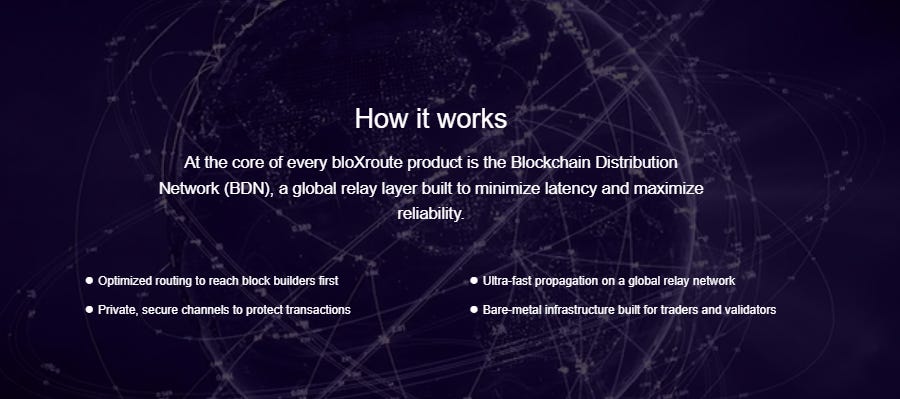
On EVM chains, Velvet integrates with bloXroute Protect RPC infrastructure to help protect users from MEV front-running and sandwich attacks.
Normally, when a transaction is sent through a public mempool, bots can see it before it lands onchain. If the trade is profitable to attack, searchers can attempt to place transactions before and after it.
That is the classic sandwich attack.
bloXroute Protect RPCs help by routing transactions privately to block builders instead of exposing them directly in the public mempool. This reduces the ability for MEV bots to detect and attack the transaction before it is included.
For Velvet users, this means EVM execution can benefit from private routing designed to reduce front-running and sandwich risk while improving speed and reliability.
Again, this happens through Velvet’s trading stack automatically.
The Jared Lesson: Execution Is Part of Security
The Jaredfromsubway controversy shows something important: execution is no longer just about getting the best price from an aggregator.
Execution itself is security.
A route can look profitable and still be dangerous.
A transaction can simulate correctly and still expose a user to MEV.
A swap can go through and still leak value to bots.
A trading system can be automated and still be manipulated by adversarial markets.
This is why Velvet is building around a simple idea:
The user should express intent.
The platform should handle execution.
Whether you are trading manually, following strategies, using AI agents, or managing portfolios, the execution layer should be working in the background to protect against unnecessary value leakage.
From Wallet UX to Protected Execution
The future of onchain trading will not look like users manually connecting wallets, switching networks, configuring RPCs, setting priority fees, and hoping they do not get sandwiched.
It will look like this:
Create a wallet with Email or X.
Fund it.
Trade.
Let Velvet handle routing, execution, and MEV protection.
That is what Velvet is building.
A trading experience where sophisticated infrastructure is hidden behind simple UX.
Where users get MEV protection by default.
Where Solana trades can route through 0slot.
Where EVM trades can route through bloXroute.
Where execution quality is not treated as an afterthought.
The Bottom Line
Jaredfromsubway became famous by extracting value from other traders.
Then it became the latest reminder that onchain markets are hostile, automated, and unforgiving.
For users, the takeaway is clear: trading without MEV-aware execution means leaking value to the most sophisticated players in the market.
For Velvet, the mission is just as clear: bring professional-grade execution protection to every user, without making them think about the infrastructure underneath.
Because in DeFi, the best trade is not just the one with the best quoted price.
It is the one that actually lands cleanly.